




Catie Holdridge
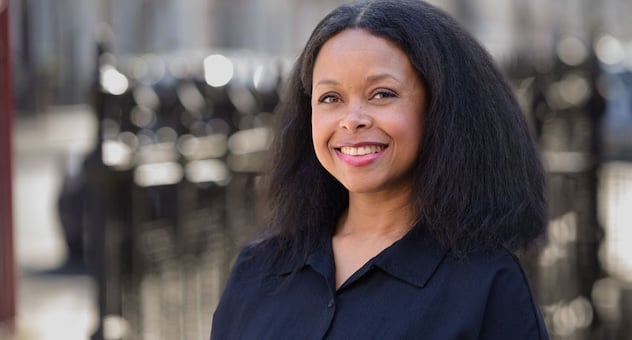
As a journalist, PR consultant, author, poet and communications trainer, Greta Solomon has built a career on her creativity. Now she loves showing others how they can unlock their own. We sat down for a chat about creativity myths, how a creative mindset helps you at work (and in life), and how to avoid the traps that drain your creative well.
What do people get wrong about creativity?
Greta Solomon: I think there's been a misconception that creative thinking is only for quote-unquote 'creatives'.
Traditionally, companies were separated into the ‘creative’ types – the people who wrote the copy in an advertising agency, for example. The people who came up with the ideas. On the other side, there were the so-called ‘suits’, who did the strategy work, the finance, the business development.
And I think we're seeing a real collapse of that division now, so that people are starting to recognise that creativity is for everybody. It isn’t a question of, ‘Can anybody be creative?’ It's that everybody already is creative. So many people have just forgotten what it was like as a child, when ideas came so easily and imagination was just something that they did.
Throughout the traditional education system, people have been taught to be very logical and to be afraid of getting things wrong. So we need to remember creativity is for everybody, and it's all about how we access it. And how we remember those muscles that we all have that may just be a little bit out of practice.
And what would you say to those people who think creativity is something only some people have – and perhaps that they’re ‘just not creative’?
GS: People do ask whether anyone can be creative. They're often thinking in terms of a typical creative career in the arts or performing industries. Something which requires a mixture of natural talent, training and real artistic discipline on a daily basis. But that's not what we're talking about when it comes to everyday creativity at work.
When you think of everyday creativity, again, the fact is that everybody already is creative, and it's really a matter of working those creativity muscles.
And when you think about your physical muscles, it's obvious that in order for them to not atrophy, you need to work them in the gym, or even just go for a gentle walk. But we forget that creativity requires the same kind of daily practice.
So if you think you're not creative, it may be that you've created a lot of blocks and negative thoughts about your creativity. Often, I find in my work as a writing trainer that this has happened in people long ago, when they were first at school, writing and thinking of ideas. And a teacher came and got a red pen out and started telling them, ‘No, this is wrong,’ or ‘I don't like that idea,’ or ‘Are you sure you want to say it like that or do it like that?’
People come to think there's a right way to do things and a wrong way to do things. They start to self-censor and self-edit until they think that creativity is not for them.
And it's really a process of remembering: taking off those layers and starting to think, ‘I can be creative. I am creative.’ It's about starting to practise in small, everyday ways and letting the creativity that's already there flourish.
So why is it important to develop your creativity, even if you have no plans to paint, draw, be a poet etc?
GS: Even if you have no plans to make anything in a traditional creative sense, it's important to develop creativity because it really is the essence of what makes us human. And now, with the proliferation of so many AI tools, having that human edge is a huge competitive advantage. Even if you're not thinking in that way, that you have to ‘be a competitor’ in the world of work.
What [developing creativity] really does is increase your ability to have quick ideas, to think on your feet.
What challenges can a strong creative thinking mindset help with at work?
GS: The challenges that it can help you with is anything really that involves other people – which actually is everything!
It's anytime you're thinking of influencing, persuading, connecting in any way. That could be an email to a colleague or a new business proposal or when you want to convince a person to do things in a different way.
That's where creative thinking really comes to the fore. It could be that you want to discover a different way of doing things: maybe how to organise a team, how to better structure an article, how to think through your expertise and what you really want to communicate to people.
It's in all those moments of putting disparate ideas together, which is all creativity really is. It's picking and sorting. Think of your brain as this zigzag – it's zigging and zagging through these different places, making connections.
Are there other benefits to cultivating your creativity?
GS: Yes, creativity can help you in three quite distinct ways. It can help you to relieve stress, anxiety and depression. Not clinical depression, of course, but that everyday malaise. It can help to lift you up and lift your spirits.
One of the other things it does is it gives you the headspace to work through problems, which is a huge benefit in our working lives.
But the other thing that it does, which we can underestimate, is it helps you to feel confident and raises your self-esteem.
Because when you use creativity to think through something difficult, to confront a challenge and work through it, you're building this great level of confidence. Even if you're busy and swamped with deadlines, you know you have a few creative practices that will mean that you can deliver what you need to deliver.
And when you continue to repeat this process of beating challenges and finding creative solutions, it creates this real sense of self-efficacy and feeling confident in your day-to-day life. That is such a bonus and an asset in and out of work. It’s something that you really can't put a price on.
What sort of things threaten our ability to think creatively?
GS: One of the biggest threats is, of course, artificial intelligence. The research is still quite new, but it is showing that the neural networks in the brain that govern thinking and creativity and insight become eroded the more that you use any AI tool.
I read an interesting article on a Substack recently, by a doctor who’d started using an AI tool to transcribe his patient consultations. The AI tool would give a summary and recommendations. And it would, he thought, do more than he could do, as a harried doctor who's busy and under pressure.
But, in fact, he found that relying on an AI tool to think for him meant that he didn't have those natural associations between the things that are not said. When it came to remembering the patient, he couldn’t put the patient with the notes. He’d completely forgotten who was who and what it all meant.
So we have to understand that the deeper meaning and what's happening sort of between the lines of your thinking can't be replicated in an AI tool. You might think that it sounds like it's coming up with better ideas, but what it's really doing is beige-ing down everything.
And it's your insight, your background, your education, the books you read, what you think – all of that – that is so necessary to think of ideas that connect and that are unique to you. Overusing AI will erode your thinking, but also the ideas are not going to be better: they're just going to seem more slick. That's not what's needed. We want this human connection. We want things a little bit different. We want that spark of creativity and that spark of insight.
AI is, of course, good in so many ways. But it needs to be used with discretion.
Funnily enough, one of the other threats to creativity is often yourself and not giving yourself the downtime that you need for these creative ideas to bubble up.
We think that we have to be busy all the time. With all our technology, with mobile phones, with constant notifications. If we just have five minutes, we’ll fill it with a quick text, a check-up on progress of something, or we’ll quickly check the news. And that’s not allowing that downtime for the brain to settle into a slower brainwave.
So we can get in our own way when it comes to being creative?
GS: Yes. One of the key things that can hamper our ability to be creative is feeling under pressure, feeling stressed. Ironically, creativity is also an antidote to that. Studies have shown that it helps to relieve stress and reduce anxiety and depression.
But at the same time, you need to be in a more relaxed nervous system state to be creative. So it’s about allowing yourself that downtime – and giving yourself permission to have those pockets of time.
Also, to think of it as work. I do this myself as a writer: sometimes, in those times when I'm ‘just’ thinking, I think that I'm not really doing anything.
But that's when the real work happens. And we need to have that mindset shift: that creative thinking, all types of thinking, is work. It's not slacking off, it's not just looking out the window and not doing the tasks you’re meant to do. It’s a necessary part of our working lives. It needs to be protected and needs structures around it, so that you put it in your diary and actually make it part of the day.
Look out for the next rerun of Greta's popular webinar The Creativity Habit, where you'll learn some quick, practical exercises to unlock and develop your creative thinking. Subscribe below to our mailing list to hear when the next session is coming up.
Sign up to updates
Stay in the loop on the latest expert advice, resources and webinars on communication that works.
Subscribe
Expert advice to your inbox