




Professional email writing
Expert content to help you make the most of the #1 communication channel at work
Contents
Featured

Build your reputation
How to email like an Impact Player

Use this structure for tricky emails
Build your reputation
How to email like an Impact Player

FAQs
Why you should always include ‘sent from my iPhone’ in your mobile signature
All articles
How to email like an Impact Player
Why you should always include ‘sent from my iPhone’ in your mobile signature

Writers without borders: three rules for international emails

Five signs that it’s time to pick up the phone

The seven rules of writing difficult emails

How do you start and end an email?

How to write effective networking emails, using psychology [with examples and templates]

Seven ways to show the people you email you care (no need for xoxo)

The one phrase you should (almost) never use to start an email

How to show empathy in your customer service responses [with examples]

Five email mistakes that will lose you customers
Quick questions
For those answers that don't need a full article
While you can't account for every taste, there are a few options that are generally safe for work. 'Best' may leave a few people asking 'Best … what?' but it is an increasingly common choice and unlikely to cause widespread offence. If in any doubt, just add a 'regards'.
And don't forget that punctuation also helps to convey your meaning. It can't do all the heavy lifting there, but it's still an important part of the picture.
If you're on friendly terms with them already, add a personal touch by referencing something you've made a point of remembering: 'I hope you had an amazing trip to Costa Rica (and I'm not jealous at all)!' or 'I hope your son's clarinet recital went brilliantly.' Pitch your tone to suit the relationship.
If you're writing a brief and functional email to a colleague, you may be able to just get straight to the point: 'Here are the meeting notes, as promised.'
If you're sending a cold email to a new contact, you'll want an opener that gives them a reason to read on. Two important factors here are creating trust and providing incentive. So, this could be saying that a mutual connection suggested you get in touch (if this is true!). Or, for a cold sales email, you can start with a business challenge you know they'll recognise or a goal you know they have. Then move swiftly on to how you can help them solve the challenge or achieve the goal.
Useful resources

Prompting success

The Boardroom Advantage
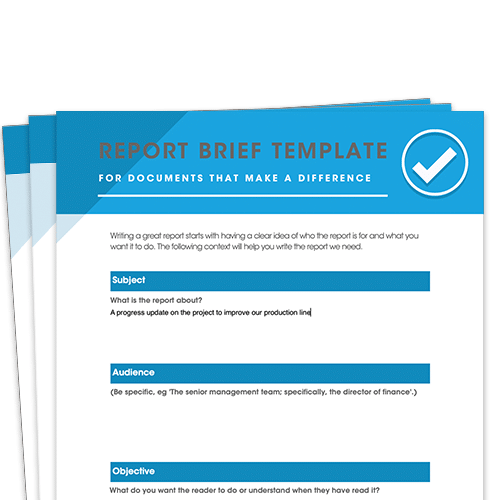
Report briefing template

Proofreading checklist
Case studies
See how we've helped our clients

Business writing essentials, Writing to customers
Demystifying legal speak at Nabarro for a rebrand that sets it apart from the competition
Nabarro


Bids and proposals
Streamlining the writing process and speaking with one voice at Suez Environnement Group
Suez Environnement Group


Technical writing, Writing to customers
Environment Agency cultivates a new public image
Environment Agency


Bids and proposals
Liverpool John Moores University boosts sales-writing skills with bespoke training programme
Liverpool John Moores University


Business writing essentials
Concise, consistent and contract-winning writing at Spinning Clock
Spinning Clock


Business report writing
Turning complex information into impactful research reports at CFE
CFE Research


Writing to customers
HSBC overhaul complaint-handling style to cut comeback and connect with customers
HSBC


Business report writing, Writing to the board
'We cut the iterations on our strategy documents from 56 to just 4!'
Shawbrook Bank

Bids and proposals
How a tiny team at a children’s charity won the biggest contract of their lives
One YMCA


Business report writing, Professional email writing
Heartlands High School invests in better writing skills for a stronger future
Heartlands High School