




Technical writing
Articles and resources to help you turn your expertise into clear and precise technical documents
Contents
Featured

Presenting data
Dazzling with data: how to create charts that win friends and influence people

Check your figures
Make communicating numbers as simple as 1, 2, 3

Fundamentals
How to make an impact with numbers and statistics

Fundamentals
These five techniques will transform your technical writing

Technical fixes
How to fix the 7 most common glitches in technical writing
Presenting data
Dazzling with data: how to create charts that win friends and influence people
Quick questions
For those answers that don't need a full article
A report could, for example, be part of a bid for a project lasting decades that has to meet complex technical specification and legislation.
In both cases, documents might be on file long term as a crucial record, so the writing must be clear, concise and precise, referencing who did what and when.
Clearly identifying the reader is always important for what you write to be effective, but it's particularly important in this style of writing. Will your reader(s) understand complex technical terms? You can’t afford to leave them scratching their heads or simply losing interest if your writing is not on their level. Complex ideas don’t need complex language – it should be clear, concise and precise so the reader focuses on what’s being said rather than how it’s being said.
Read about how to write technical information for a non-technical audience
And doing this may also mean increasing the size of the audience your work is exposed to, as NYU scientific writing lecturer Philip Rodenbough explains in this article. As he puts it, 'All technical writing is improved by making it more accessible – as long as we’re not completely re-explaining the very basics.'
Useful resources

Prompting success

The Boardroom Advantage
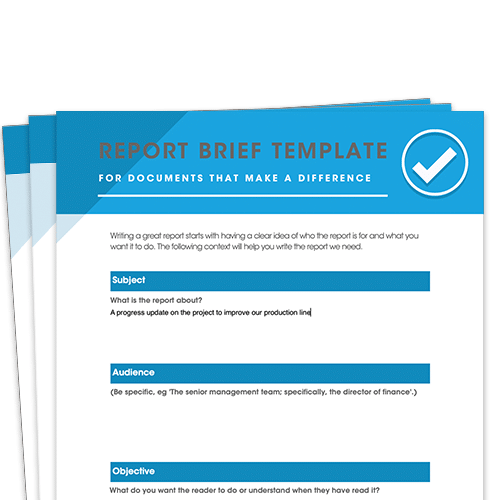
Report briefing template

Proofreading checklist
Case studies
See how we've helped our clients

Business report writing, Professional email writing
Heartlands High School invests in better writing skills for a stronger future
Heartlands High School


Business report writing
Making crucial health information accessible for the people who need it
The Health Policy Partnership


Writing to customers
HSBC overhaul complaint-handling style to cut comeback and connect with customers
HSBC


Corporate communications, Writing for marketing
Transforming opinion writing at EY for insights that get press attention
EY


Business report writing
Turning complex information into impactful research reports at CFE
CFE Research


Technical writing, Writing to customers
Environment Agency cultivates a new public image
Environment Agency


Professional email writing
Small UK charity makes big international impact thanks to clear, convincing communications
Refugee Rights Europe


Business writing essentials
Concise, consistent and contract-winning writing at Spinning Clock
Spinning Clock


Business report writing, Writing to the board
'We cut the iterations on our strategy documents from 56 to just 4!'
Shawbrook Bank


Bids and proposals, Technical writing
Simplifying technical language and raising communication standards at SeaRoc Group
SeaRoc Group