


Featured course

Gary delivering a business-writing course

High-impact business writing with AI

Courses

Explore our range of courses, covering all topic areas of writing at work.

Choose from three formats: prescheduled trainer-led courses open to anyone, self-paced online learning and tailored in-house courses built around your needs.

Popular courses

Business report writing

$

Bid, tender and sales-proposal writing

$

Writing exceptional board reports

$

Policy and procedure writing

$

Storytelling in business

$

High-impact business writing with AI

$

View all courses

5
Greta Solomon

Rethinking creativity: a Q&A with Greta Solomon

Interview still of host J. Alex Greenwood and guest Rob Ashton, with YouTube play button

Is AI making our writing better – or worse? PR After Hours interview

More from the blog

5

Resources

Whether your next task is a report, a press release or a presentation, a little help goes a long way. Find actionable, expert guides and tips in our Knowledge Hub.

Bids and proposals

$

AI

$

Business writing essentials

$

Writing to the board

$

Writing to customers

$

Writing for marketing

$

Technical writing

$

Professional email writing

$

Business report writing

$

Corporate communications

$

View all resources

5

FAQs

You’ll find answers to the most common questions we get about our training on this page. If we haven’t answered your question, you can submit it there. 

Explore our FAQs

$

Useful information

If you’re considering our training, these pages will give you a fuller picture of what we do and how we do it – and how it can help you or your team.

Our pricing

$

Our approach

$

Our writing analysis

$

Coaching enquiry

$

AI Ready

$

Emphasis is the UK’s leading business-writing training company, offering specialist business-writing training and consultancy services to private and public sector organisations all over the world.

About us

Emphasis has been training companies and individuals in how to make their communication work for 25 years. Find out more about our story and our work below.

Our story

$

Our people

$

Our clients

$

Case studies

$

Courses

Resources

FAQs

About Us

Professional email writing

Expert content to help you make the most of the #1 communication channel at work

All articles

How to email like an Impact Player

Why you should always include ‘sent from my iPhone’ in your mobile signature

Writers without borders: three rules for international emails

Five signs that it’s time to pick up the phone

The seven rules of writing difficult emails

How do you start and end an email?

Smiling man at computer with cup of coffee

How to write effective networking emails, using psychology [with examples and templates]

Seven ways to show the people you email you care (no need for xoxo)

The one phrase you should (almost) never use to start an email

How to show empathy in your customer service responses [with examples]

Five email mistakes that will lose you customers

Quick questions

For those answers that don't need a full article

How someone ends (and starts) their professional emails is a matter that can evoke curiously strong emotions and vehement personal preferences. While you can't account for every taste, there are a few options that are generally safe for work. 'Best' may leave a few people asking 'Best … what?' but it is an increasingly common choice and unlikely to cause widespread offence. If in any doubt, just add a 'regards'.
Yes, some people certainly do – and if you consistently use erratic or incorrect (or zero) punctuation in your emails, you can be sure that eventually you'll find them. Remember that while it's true that email can be informal, it's still a reflection on you out in the professional world. And don't forget that punctuation also helps to convey your meaning. It can't do all the heavy lifting there, but it's still an important part of the picture.
Some people see this well-worn expression as polite white noise, others as insincere filler. The best way to start any email is by setting the context (which can include the human touch, where appropriate). But the best alternative to 'I hope you're well' will depend on who your recipient is. If you're on friendly terms with them already, add a personal touch by referencing something you've made a point of remembering: 'I hope you had an amazing trip to Costa Rica (and I'm not jealous at all)!' or 'I hope your son's clarinet recital went brilliantly.' Pitch your tone to suit the relationship. If you're writing a brief and functional email to a colleague, you may be able to just get straight to the point: 'Here are the meeting notes, as promised.' If you're sending a cold email to a new contact, you'll want an opener that gives them a reason to read on. Two important factors here are creating trust and providing incentive. So, this could be saying that a mutual connection suggested you get in touch (if this is true!). Or, for a cold sales email, you can start with a business challenge you know they'll recognise or a goal you know they have. Then move swiftly on to how you can help them solve the challenge or achieve the goal.

Useful resources

Prompting success

The Boardroom Advantage
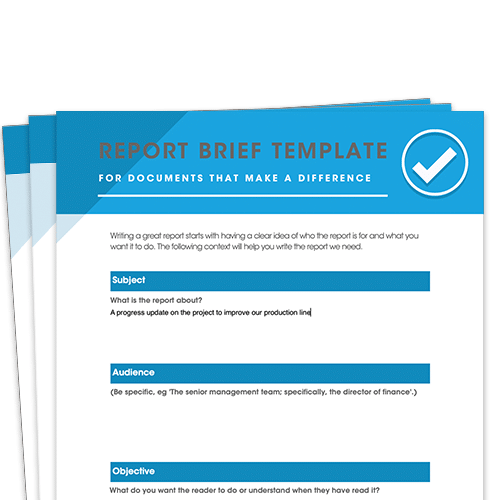
Report briefing template

Proofreading checklist

Case studies

See how we've helped our clients