
Transcript
Announcer: Welcome to PR After Hours, your weekly cocktail of news and interviews with leading thinkers in PR, marketing and business. So pull up a chair in our virtual lounge. Your host Alex Greenwood will be right back after this.
Alex Greenwood: Hey folks, today I’m welcoming back someone who’s become, frankly, a favourite around here. It’s Rob Ashton. He’s an author, researcher, cognitive science nerd, and as he puts it, someone on a mission to rescue communication from pseudoscience. If you’ve ever rolled your eyes at another self-help post promising to fix your writing with a handy set of cliches, Rob is your guy. He has spent years digging through peer-reviewed research to sort fact from fiction, then translating what he finds into usable insights for real people in real workplaces. He founded Emphasis in 1998. Since then, more than 70,000 people around the world have gone through its programmes. That includes Google, the big four accounting firms and even the royal household at Buckingham Palace. In other words, when it comes to clear writing and how our brains actually process information, Rob has receipts.
This is Rob’s third visit to the show. It also happens to come as PR After Hours prepares to close our doors, at least in this format. And I wanted to make sure we had him back while the lights were still on. Then again, endings have a funny habit of turning into beginnings. So who knows where our conversations might turn up next. We’re going to catch up on what Rob’s been working on since we last heard from him in late 2023, what he’s learning from the latest research on communication and cognitive science, and why so much of what passes for advice on LinkedIn and bestselling business books still rests on sand. Rob Ashton, welcome back to PR After Hours.
Rob Ashton: Hey, Alex. Thank you so much. Thanks for having me. It’s always a pleasure. It’s great to be back.
Alex Greenwood: Oh, it’s great to see you and to catch up. I went, oh, my gosh, it’s been almost two years. So I’m so glad you’re back. When we left our hero, that would be you, you were doing a pretty popular e-newsletter on AI, the AI writer. I was just curious, what happened with that? How did that go? And what did you learn from that experience?
Rob Ashton: I have to confess, I abandoned it. I’m a former journalist like you and you get on that news treadmill. This was the AI writer was a weekly. I did it as a way of just educating myself on what was going on with AI at the time. This was just after ChatGPT had hit the public consciousness and it was drinking from the cliched fire hose. That’s what it felt like. There were a lot of promises at the time. Microsoft kept saying we’re bringing out, we’re incorporating Copilot next month into Office 365, as it was then, and didn’t. So I’d write these stories about, hey, it’s coming. But there was so much happening at the time that I just burnt out and I had to park it. I don’t publish the AI writer anymore, but I am very much back into the whole AI debate. Very much so. And I’d say for the last six months, that’s something I’ve been thinking about a lot.
Alex Greenwood: Well, that’s the reason I did bring that up, is just to establish your bona fides in this. You know what you’re talking about. You were immersed in AI for a long time there. And early on, you were probably the first legitimate AI expert that I had on the show. I want to tell you a little bit about my use case for it. I do a lot of writing on Substack now. I have an hour and 20 minute drive each way to work every day. So I hit chat GPT and I talk to it. I’m driving so I can talk. And I say, ‘Looking at a new Substack essay, I want to cover this topic, this topic, and this topic. I’d like to pull information from this writer, this writer. And I’ve been reading Robert Greene’s Mastery. And I’d like to take some of what Robert Greene says about going from basically an intern and an apprentice all the way to the road to mastery.’ I might just talk all those things in there. And then I’ll say, ‘Give me an outline.’
And then by the time I get to work and I get on my lunch break, I’ll go look at the outline. And then I’ll play with the outline a little bit more and I’ll say, ‘Thanks very much.’ I’ll go write my drafts, run it back through, tweak that, look for sources here and there to bolster what I’m saying. And then when that’s all done, I hand it over to my friend Claude. And I let Claude, which I think is a better writing companion, look at it and I’ll give Claude a really tough prompt on myself. I’ll say, ‘Hey Claude, as an editor for the Atlantic…’ and it gives me some good suggestions that I often use. So that’s my use case for it. And I have found that having that outline just helped me a little bit. I’ve never been much of an outliner, but now that I have my beginning, middle, and end, I can source it properly. My productivity has gone through the roof. I’m almost enjoying the writing again more than the podcasting, and I’ve been podcasting for 20 years. So that’s my use case. Wondering what you think, and then maybe it could circle back to where you are with AI.
Rob Ashton: Sure, I think that’s all good. I think there are good ways to use AI and bad ways to use AI, and pretty much all of what you say there is a good way to use it. You have to use it mindfully, consciously, whatever adverb you want to pick. I have to say, you were saying about talking to ChatGPT, I was doing that myself until about six months ago. It is a very good way of doing it. But I stopped when it started doing this little flirtatious giggle at the end of the answers. It’s like, whoa, I’m not ready for that. It feels like a real conversation as long as you tune it correctly. I needed to retune it again with the instructions because every answer is a fairly long answer. So even if you just say, ‘That’s great, I’ll come back to you later,’ you just want it to say, ‘Okay, no problem,’ not, ‘Yes, that’s great. And if you have any more questions…’ It basically repeats what it’s just said.
But you can change that. As you said, when you use Claude, you prompt it to act like an editor at The Atlantic. There are settings with all of them now where you can give it a style guide, you can give it a custom dictionary, which can then apply to all of your conversations so you don’t have to do them every time. I find that really useful. With the kind of brainstorming or trying to get up to speed on a particular topic, of course, you have to be very careful there because ultimately they are all programmed to please. I can’t remember the last time I ever got a response that said, ‘I’m sorry, I don’t know.’
The way I use it is to increase my productivity. I use a personal knowledge management app called Obsidian, which I’m sure a lot of your listeners will be familiar with. It’s got a whole community around it so you can customise this thing with plugins. One of them is something also called Co-Pilot, which works really well because it enables me to interrogate my own database of notes. I can say, ‘What have I done on this? Please find all of my relevant notes and give me an overview with links to the original notes.’ It’s the sort of thing that I’d never dreamt of being able to do before. Or I can use sound files. I can do a daily log, a voice log, and then just sync that to Obsidian, and then the next day, just say, ‘Okay, give me a summary of what I did yesterday.’
I have ADHD, and it’s a very good way of just getting back into the flow, because one of the common things with ADHD is yesterday is a foreign land. I can’t remember what I did yesterday. And even if I can, even if I look at a list of things, it won’t mean anything. It would just be like a list that somebody else wrote. It can be very good at just nudging me back into the day. There are all sorts of things you can do, and I think that’s all great. We should use it. I don’t think that’s how most people are using it, or a lot of people. I think a lot of people aren’t using it like that, and that may not end well.
Alex Greenwood: I’m very wary of letting it do too much thinking or writing for me, particularly because I have a bond of trust with my subscribers who read that, and particularly the ones who pay for it. My stock and trade is my credibility and the fact that I’m a writer. I’ve read some stuff that is competently, obviously just maybe second draft pulled out of some AI from other writers, and that’s your thing, great, but there’s just so many little tells still. If I see that on a regular basis with somebody, I’m not mad at them, I get it, but I maybe don’t want to continue to re-up for that kind of thing. So I’m very careful of that myself.
But I’m blatant about using the image stuff because I’m not a graphic artist and I don’t want to pay for stock images. Forgive me to all my graphic artist friends, but I can’t afford you. So I’m happy to say the most creative thing I can do is describe a particular image I might want and see if it can do it.
The thing you’re talking about too with the Obsidian stuff, I’m going to be looking into that. But in the ADHD factor, I have close colleagues, at least one who has ADHD. And it is fascinating what you said, ‘yesterday is a foreign land’. I know as I get older, I’m a lot more what I call scattered about things. And one thing I’ve done, and I think people at work think it’s quaint, but I don’t care, it works for me. I’ve invested in these note cards. And I went analog, Rob. I bought all these lovely Ellington fountain pens. And I’ve made every morning the things I’ve got to get achieved as a part of my system. And then it goes on a little rack in front of me all day. And I can mark off the things I’ve done. And then anything I didn’t get done today, I can transfer to tomorrow. It’s just one way of me taking my head out of the zeros and ones and just getting it down to the very 18th century stuff that seems to be helping me stay organized. Curious if you have any thoughts on the analog movement.
Rob Ashton: I do. I’ve recently started reading books. I mean, these paper things. It’s like a pile of paper sandwiched between two pieces of card. And I, rather than reading it on a Kindle on my phone… I’ve got loads of books on my shelves, I just never read them. I’ll be out and about, I’ll read something on my phone. I quite often have three versions: the audio, the Kindle, and the hard copy. Often several copies of the same book, by the way. I refer you to my previous response about ADHD where I’ve completely forgotten, ‘That’s a good book, I’ll buy that,’ another two on my shelf a year later.
But there is something different about reading a hard copy book. I’m not one of these people who says that if you listen to the audio version of a book, you haven’t read it, but it is different. I find that with, let’s say I’m listening to an audiobook on a walk. If I take that walk again, take the same route, I’ll find, even if it’s a week later, at a particular point in the route, I’ll remember what I was listening to at that point, which speaks to the connection with the real world again, which is a kind of an analog thing.
But with reading books, I just find it different. I scribble notes to myself in the book and then I’ll record those as voice notes and get AI to put them in my note system. I think that’s the trouble with analog books, is that with digital ones you can use Readwise to gather together all of my highlights in Kindle and then put them in a vault where I never look at them again. But with working a book in this way, I can make notes to myself and then I record them, and then that goes in my daily log. And then the next day I will refactor that, split it into different notes and say, ‘Oh, that’s what I was reading yesterday, right, I will put that, I’ll link it to another note.’
But with writing, analog writing is different. It’s definitely different. You are using a pen or pencil to scratch symbols on a bit of paper. You’re not looking at a screen, so you’re not going to get drawn into your screen. I think that’s one of the problems with doing that, particularly on your phone. All the world’s information is just a tap away, and your ideas have to be pretty good to compete with that. No offense, mine aren’t.
But then also you’ve got the things that are going on in the brain. When you read something, the cerebellum in the brain is very active because of the eye movement that’s required. Eyes move in these little jumps called saccades. We read in little hops and then join them together. But when you’re writing, it’s a lot more than that. You’ve got to control your left or right arm. So it is different in that way. But there have been studies that show that does affect the thinking process as well. I think it affects it in a very beneficial way in that it is less overwhelming. Research shows that when you are writing like that with an analog pen, the process in the brain is significantly different. You’ll probably make connections that you wouldn’t make if you were just typing.
And I don’t think there’s anything to beat that feeling of just scrunching up that bit of paper at the end of the day and chucking it in the recycle bin. And even transferring stuff that you haven’t done the next morning and go, ‘Right, I need to put that on my list again.’ The act of moving it from one list to another, it’s like, ‘Well, I’m selecting, I’m choosing. Do I really want to write that down? Or am I still going to do that?’
Somebody said to me, probably about 20 years ago, when I was using one of the early PDAs, a Palm Pilot, and I just showed him this thing proudly. And he said, ‘Yeah, the trouble with that, Rob, is it never forgets.’ And humans need to forget, because you don’t want something that’s just going to remember every single thing you tell it because that list is going to get very long, very quickly. Whenever I come up with some new system or some new app, I feel wonderful to begin with because it all feels under control and doable. And then within three weeks, it’s like, ‘Oh, my God, what are these things on my list?’ And it’s still reminding me about them and they don’t mean anything to me anymore. So I think that going analog gets around that as well.
Alex Greenwood: What an extraordinary thing to be told. I had a Palm Pilot as well. And I do remember an elder friend of mine saying, ‘Well, that’s neat, but I don’t know if it beats this though,’ and he whipped out a reporter’s notebook. And I was like, ‘Oh, you relic, you dinosaur.’ This is interesting about the books. Me too. You see behind me, they’re blurred out, but in this house, we have hundreds of books. And they all look at me kind of balefully as I realize, ‘Yes, I know, I haven’t read you, you, you, or you, and I bought more.’
One thing I’ve done, Rob, this feels like cheating in a way, but I’m gonna tell you what I do. I’ll be reading a book, I’ll see a passage, I’ll photograph the package and then I’ll upload it to chat and I’ll say, ‘Add this to my notes for the next essay on blank.’ I absolutely adore that capability.
Rob Ashton: That’s really good. Yeah, absolutely. I think there are so many things like that that you can do. Again, that to me is a very good use for AI. Even with me reading my notes into a voice recorder, those then go into a system that I can interrogate. They’re not lost. That is actually far better for me than just highlighting in Kindle and then they go in somewhere where I just don’t interact with them at all. And plus you’re taking a photo. So again, although you’re using a digital tool, you are doing something mechanical. And so you are interacting with it. Yeah, I think these are all good ways. I think it can be incredibly liberating and enable you to do your best work.
Alex Greenwood: I appreciate that validation because I really do at times feel like, even though you understand this is still my thoughts, my work, it’s just made things so much easier that I feel like, am I earning this? Sounds so dumb. Am I earning the success I’m having on Substack? Is that stupid? Help me out here.
Rob Ashton: That’s weird, isn’t it? One of my favourite authors, Oliver Burkeman, said on Substack recently… somebody had given him a gift, and it was a notebook with his name embossed on the cover. And he was trying to work out why it pleased him so much. He’s an author, giving him a notebook is hardly a startlingly original choice of gift. But he said, ‘I think it’s because of the thought that went into it and the effort that someone’s made.’ And I said, to me, that’s a bit like why generating text with AI is not the same. Because there is very little effort involved. And there’s a lot more to writing than generating words on a screen or on a notepad.
This is what we miss. Where’s the effort? If somebody’s put effort into something, it seems almost like a quaint notion. I don’t mean you have to have tortured yourself over it, I just mean you have to have engaged your brain a little bit, because communication is something that connects one brain to another. And if either one is missing, then by definition, it’s not communication. What thoughts are you communicating? These words have just been generated on a screen.
If you use AI to get you there a bit more quickly by helping you think, I don’t think that’s a problem. If it gets you an outline, great. It depends what you’re writing. There’s something about writing connecting the reader to the author that I think addresses a very old human value. We evolved for connection. Being excluded from the group would have been a death sentence back when we lived in small communities. And so we have this need for connection. When you’re reading something that someone else has written, it is connecting you to them. If they haven’t written it, if no one’s written it, there’s a big part of us that recoils from it.
Now, if I’m reading instructions on how to assemble some flat-pack furniture, I don’t really care that a person hasn’t written it. So it’s not the same with all writing. But I think with much of writing, perhaps even most writing, you need that connection to a human being. It’s that kind of time-travelling that writing can do. You can read something that an author wrote 200 years ago and you get in their head, and that’s part of the joy of it. So if you take either person out, then what is the point?
Burkeman actually posed a thought experiment in his newsletter a couple of years ago where he said, ‘Just imagine you get a message from an old friend on Facebook. It comes out of the blue and you are absolutely delighted. You spend about 10 minutes reminiscing. And at the end, you agree that you really shouldn’t leave it so long next time. And you feel great. And then five minutes later, you get a message from Meta and it says, ‘Actually, that wasn’t your old friend. Our new AI has simulated that based on your interactions with them in the past and what we know about them. It wasn’t them. There was no person there.’ And his question was, ‘Does that matter? After all, you had an enjoyable conversation.’ And then he says, ‘I didn’t say it was a difficult question.’ Of course it matters, because the whole point was to connect you to your friend.
So I think that’s something we’re missing. I think we’ve solved for the wrong problem. We’ve solved for generating text on the screen without taking account of the fact that writing is thinking. Human beings will go to extraordinary lengths to avoid thinking. These apps have come along and they say, ‘Hey, we can write for you.’ And you don’t realize it’s because it’s doing your thinking for you. And so we’ve got this crazy situation where people are using AI to take away the effort of thinking. The AI generates the text. Somebody else looks at it and they don’t want to read it, so they summarize it with AI. And so you’ve got AI producing the text, AI reading it. The humans are taking themselves out of the loop. You want to talk about the jobs apocalypse and people losing their jobs because of AI? One thing that humans can do that AI can’t yet is think. Because it’s not actually thinking, it just appears to. And we’re refusing to think, and we’re signing our own redundancy notices when we do that.
Alex Greenwood: You mentioned this concept of radical competency. It’s a series I’m working on. Basically, we’re talking about the people who just quietly and efficiently get things done. They’re no-drama people. They just make the machine go, and they make it go smoothly. One key part of radical competency, in my opinion, is the art and skill of anticipation. Anticipating what the industry, the office, the boss, whomever will need next and being there on it. Whereas you just said, thinking is hard. Radically competent people, I think, are somewhat instinctually capable of anticipation, but it requires thought to understand how to deal with the situation before it becomes a problem.
I think that is the key when you talk about redundancy and people losing their jobs to AI. I did a particular edition where I talked about radical competency in the age of AI. And I said, ‘Ask yourself a question. When all of the work that an AI can do effectively, efficiently and correctly for you is done, how much is left of your job?’ If you say not much, you have a problem. If you say a lot, you’re probably fine. I’m saying that right now you still have time, I think, before you’re eventually made redundant. You’ve got to find ways to be, by thinking, by anticipating. My question to you is, do you think that most humans have the capacity to identify that right now and take a good hard look in the mirror?
Rob Ashton: Some do. If you point it out to them, will do. I think that there will be an awful lot of people who don’t. But if you’re one of those radically competent people, then you definitely do. The very people you mention are the ones who have the capacity to do that, perhaps with a little nudge. And maybe they need to do their own PR as well, because one of the problems with being quietly competent is you solve problems and nobody notices. Nobody knows. Until maybe you take a well-earned vacation and then everything goes to hell in a handcart. And then they go, ‘Oh, gosh, that’s what they were doing.’ So I think there’s that. But I think that probably it’s time for those people to maybe use their writing to raise their own stock value with some judicious personal PR.
But I also think that AI won’t make an incompetent person competent. If you’re not very good at your job, AI will not suddenly make you good. I said this back when I was doing the AI writer, I predicted then, there’s a real issue here that there’s a risk that companies will bring in AI and they won’t improve their processes. What they’ll do is they’ll use AI to scale up bad practice. And so they’ll just have a bigger problem than they had before. They’ll be getting the negative outcomes far more quickly and far more of them. And they never get to actually solve the real problem. It comes back to thinking again. It’s like, ‘Oh, we’ve got a problem. Let’s get AI to do more of that,’ and not questioning whether you should be doing it in the first place. It’s the same thing with somebody who isn’t that great. AI won’t make them great.
Alex Greenwood: The well-known Seth Godin, marketing guru, he jumped on AI. He created these decks. This one’s called the Mentor Deck and it’s 50 proven prompts built for Claude.ai. It’s a powerful tool that lets you work with AI to create, decide and strategize. You get these cards, you sign into Claude, then you follow the simple instructions. You deal a card, you find a topic that resonates, then you scan the QR code in the back and lean into a productive conversation. I think that’s a clever thing. Are you seeing a lot of innovation in that regard with AI? I’m also reading anecdotally at least some studies to show that people are not using AI as much as the AI companies want you to believe. They’re not using it very creatively, whereas this is really trying to bring creativity into the mix.
Rob Ashton: Yeah, totally. What that’s doing is just introducing an element of randomness, isn’t it? I read a few years ago, I don’t know how true this is, it might be apocryphal, but it said there was an example of a Native American tribe that would, in order to find new hunting grounds, take a piece of leather and wet it and squeeze the water out and dry it in the sun and then follow the creases afterwards in order to find new paths. And I think that’s an old problem. We follow the same very well-worn path. And something like that is doing the same thing. It’s coming from somebody else. Because that’s analog, what you’ve got there. You follow the QR code and it walks you through, it gets you right up there, and then you start having the conversation.
Yeah, I think there are people using things intelligently. It’s not the initial use case, is it? I read some research that said that the biggest use of AI is for therapy. People are using ChatGPT as a therapist. Any therapist listening, I know it’s not a therapist, but it’s not for writing. So I think we’ve probably got this second and third wave. But then also, there’ll be people who haven’t even heard of ChatGPT still, and there’ll be people who are just taking their first faltering steps. I was talking to somebody last week who wanted to generate an image for her business and somebody else said, ‘Oh, we should just use ChatGPT.’ And she said, ‘Oh, how do I do that?’ So she is now using it. So there will still be people who aren’t using it. And then at the other end, you’ve got people who have become a bit jaded and have fallen out of love with it slightly. But then some of those people, there’ll be other people who are finding new ways to use it. I’m using it to interrogate my notes and to produce minutes from meetings. It still makes mistakes, and then it’s like, ‘Well, did we say what we said or did we say what the AI says we said?’ I think you still need to use your brain again and just be mindful. If you’re going to walk to your own redundancy, then do it consciously. What a positive note to finish on. But no, I think it can really help us. The ways to use it are not always obvious.
Alex Greenwood: Rob, with Emphasis, tell the listeners as we wrap up here, who are you working with now and who is your ideal clientele? Who should call you?
Rob Ashton: So it’s generally mid-size to particularly large organizations. Anyone who employs knowledge workers. If you’re employed for your knowledge and for your brain, then we’re there to help you communicate that knowledge and to make the most of it. And not just with writing. It’s interesting because you look up communication skills training, almost no one mentions writing. They just overlook that. But I think writing now connects us to these other things we want to do with or without AI. If you want to write a presentation, if you want to think about a meeting, if you want to have a successful meeting, you can prepare with writing. Jeff Bezos allegedly insists on that at Amazon. So it’s our slogan is ‘write, think, talk, succeed’. It’s joining all of those things together. And I think it’s actually about 95,000 now, to update that bio. We’re still there, but AI is not going anywhere and we are embracing it and just teaching people how to use it effectively and not fall into some of those traps I mentioned. The website is writing-skills.com.
Alex Greenwood: Great. I will tell you, Rob Ashton, the time flies. PR After Hours is maybe going to go away in one way or another, but I’m still going to be doing these interviews here and there on Substack, and I hope you’ll consider coming back sometime next year. I’d love to talk to you again.
Rob Ashton: Oh, I’d love that. Yeah, it’s always a pleasure, never a chore. Thanks for having me back, Alex. It’s been great.
Alex Greenwood: Back at you. Every time you’re on, I just end up rethinking things I thought I already understood. You help me rethink things I already understood, which is probably the highest compliment I can give a communications expert, and I mean that sincerely. Thanks for coming back and sharing so much of what you’ve been learning. As I said, PR After Hours is nearing last call in this format. More on that later. But conversations like this are exactly why I’ve loved doing the show. And who knows? Rob and I may well find other excuses to continue causing trouble out there in the world of writing and communication together, maybe on a different stage or under a different name, but that’s half the fun. Stay tuned for that. And remember, if you’ve enjoyed the episode, check out Rob’s website. Keep an eye on what he’s up to. Also, be sure to check in the show notes. There’ll be links to previous episodes where Rob came on and shared some great stuff. And he’s doing important work. And frankly, the world needs a little more clear thinking right now. Thanks for listening. And as always, enjoy that last call because you never know. The late Warren Zevon said, ‘Enjoy every sandwich.’ So enjoy every tipple, every cup of coffee, every conversation. And we’ll talk to you again right here in the Virtual Lounge on PR After Hours.
Announcer: You know what that means? It’s last call here at the Virtual Lounge. Be sure to visit prafterhours.com for links to what we discussed in this episode and more. Be sure to follow us wherever you get your podcasts. And join us next time for another round at PR After Hours with Alex Greenwood.
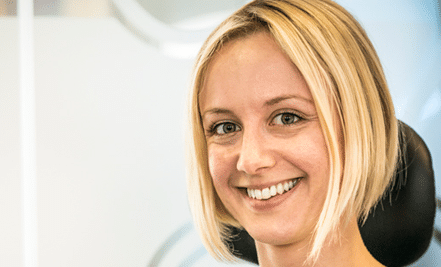
Our founder, Rob, joins J. Alex Greenwood on his PR After Hours podcast for a frank exploration of what AI is doing to us. Tools like ChatGPT, Claude and Copilot promise previously unimaginable productivity – but at what cost? The pair explore ways we might get the best from AI without losing the powerful benefits that actual writing – not generating – provides.
You can find more from Alex on his YouTube channel and the PR After Hours website.
Subscribe
Expert advice to your inbox