




Lynne Murphy
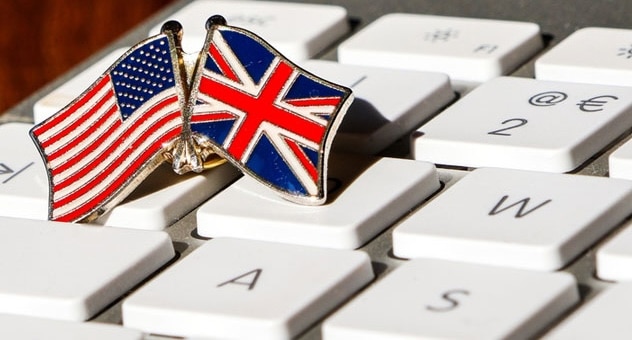
Some differences between UK and US English are well documented. For example, most people know that football is a different game in North America and the UK, and any American in the UK quickly learns not to talk about fanny packs. But there are also some more subtle differences that might stymie visitors to Britain, especially those who have learnt American English.
1. Toilet
For Americans, this is a piece of porcelain. For the British, it is also a room that contains that particular piece of porcelain. If an American tells you she got stuck in the ladies’ toilet, offer her a towel and a hairdryer.
2. Quite
Before an adjective, American quite means ‘very’, while British quite means ‘somewhat’. So, if the American tourist is quite tired, direct him to his bed. But if a Brit tells you a restaurant is quite good, you’d be wise to keep looking for somewhere better.
3. Moot
In addition to quite, British and American Englishes have other ‘Janus words’ whose meanings look both ways. A British moot point is open to discussion, but for an American, the discussion has been declared pointless. The UK Parliament puts legislation on the table for discussion, but the US Congress tables the legislation they don’t want to discuss and puts matters for discussion on the floor instead. A British speaker’s nervy athlete would be a bundle of nerves, but an American’s has ‘got a lot of nerve’ (and probably a mouth to match). And while homely means ‘comfortable in a home-like way’ in Britain (and much of the Commonwealth), in America it is a way of describing a person as ugly.
4. Heatwave
The meteorological definition of heatwave is ‘anomalously hot weather that lasts for days’, but hot and anomalous are both relative terms. British newspapers will declare a heatwave after three days of 25°C (77°F) weather. In other words, a British heatwave is everyone else’s nice summer weather.
5. Please
Americans say please – just not always where the British expect to hear it. The British say please when ordering food in restaurants (or requesting things in shops) because they view the action as a personal request to the waiter. Americans regard ordering as providing the waiter with the information he needs to do his job, so they say ‘I’ll have the chicken’. As language blogger Ben Trawick-Smith has noted, please can add connotations of impatience and exasperation to an American request.
6. Pants
Americans don’t use the word trousers much, and when they do, it only applies to menswear. Instead, Americans wear pants on their lower halves. When those garments inevitably get damaged on their travels, their wearers sometimes make public proclamations about the stains on their pants. Even more inevitably, they are regarded with horror or laughed at, since British pants usually refers to underpants.
7. Fag
The British do a lot with the words fag and faggot, which can be a shock to people who only know them as derogatory words to refer to gay men. Fag is British slang for a cigarette, so smokers ‘pop out for a fag’ and they might try to ‘bum (or pinch) a fag’ off you. But fag can also be a bother. Going out to buy more cigarettes in the rain can be ‘a bit of a fag’. Faggots, meanwhile, are found on menus; they are a kind of meatball made of (usually pork) organ meats, served with gravy and potatoes. Since no one ever seems to order any, it’s possible they stay on menus just to shock American tourists.
8. Republican
Events like the Platinum Jubilee and the King’s coronation led some British people to talk more about a republicanism that has nothing to do with Donald Trump. British republicans would like the UK to be a republic, rather than a monarchy. British republicans are likely to be considered politically left-wing, unlike American Republicans, who are named after the small-r republican ideals of the American Revolutionary War (or the American War of Independence, as the British call it). Now, of course, American Republican is almost synonymous with social and fiscal conservatism.
9. Subway
Follow signs pointing to a subway in London, and you’ll find yourself either at the ubiquitous American fast-food joint or in an underground tunnel. And there in the tunnel, you’ll find confused Americans looking around for the trains. While the New York subway is a railway under the city’s streets, in London it is a pedestrian way beneath a road.
10. Half
British time-telling differs from American in several ways, with the 24-hour clock confusing any American who hasn’t served in the military. ‘Half-eight’ to mean ‘8:30’, provides another pitfall – particularly for non-Brits who know German or Swedish, where it would mean ‘half way to 8’, or 7:30.
Want more differences? Why not download our comprehensive Guide to UK and US English.
Image credit: Jimbod / Shutterstock

Subscribe
Expert advice to your inbox